Performance Marketing Career Roadmap
Performance marketing is a results-focused career built around Google Ads, Meta Ads, analytics, tracking, CRO, and AI-powered marketing. A clear Performance Marketing Career Roadmap helps beginners develop the right skills, gain practical experience, and build a strong portfolio. Performance Marketing Masters helps aspiring marketers gain industry-relevant knowledge and practical skills to confidently start and grow their performance marketing careers.
Table of Contents
What Is Performance Marketing Introduction
Performance marketing is a results-focused digital marketing approach where businesses measure campaigns based on specific actions such as clicks, leads, sales, app installs, or conversions. It uses channels like Google Ads, Meta Ads, affiliate marketing, display advertising, and remarketing to reach the right audience and drive measurable outcomes. The process involves setting campaign goals, targeting audiences, launching advertisements, tracking performance, and continuously optimizing campaigns to improve results. While digital marketing covers a broader range of online activities, performance marketing focuses specifically on measurable results and return on investment. Learning these fundamentals is an important first step in building a successful performance marketing career.
Is Performance Marketing a Good Career?
Yes, performance marketing can be a strong career choice for people who enjoy digital advertising, data analysis, creativity, and measurable business results. As businesses increasingly invest in online customer acquisition, professionals who can manage and optimize paid campaigns are valuable across industries.
- Growing Demand: Businesses need skilled professionals who can generate leads, sales, and conversions through platforms such as Google Ads and Meta Ads.
- Career Opportunities: You can work as a Performance Marketing Executive, PPC Specialist, Paid Media Specialist, Performance Marketing Manager, or Growth Marketing Manager.
- Future Scope: AI, automation, advanced analytics, personalization, and data-driven advertising are creating new opportunities for performance marketers.
- Suitable for Freshers: Yes. Freshers can start by learning advertising platforms, analytics, conversion tracking, keyword research, and campaign optimization.
- Career Growth: Practical experience, certifications, successful campaigns, and strong analytical skills can help you progress into senior and leadership roles.
How to Build a Career in Performance Marketing
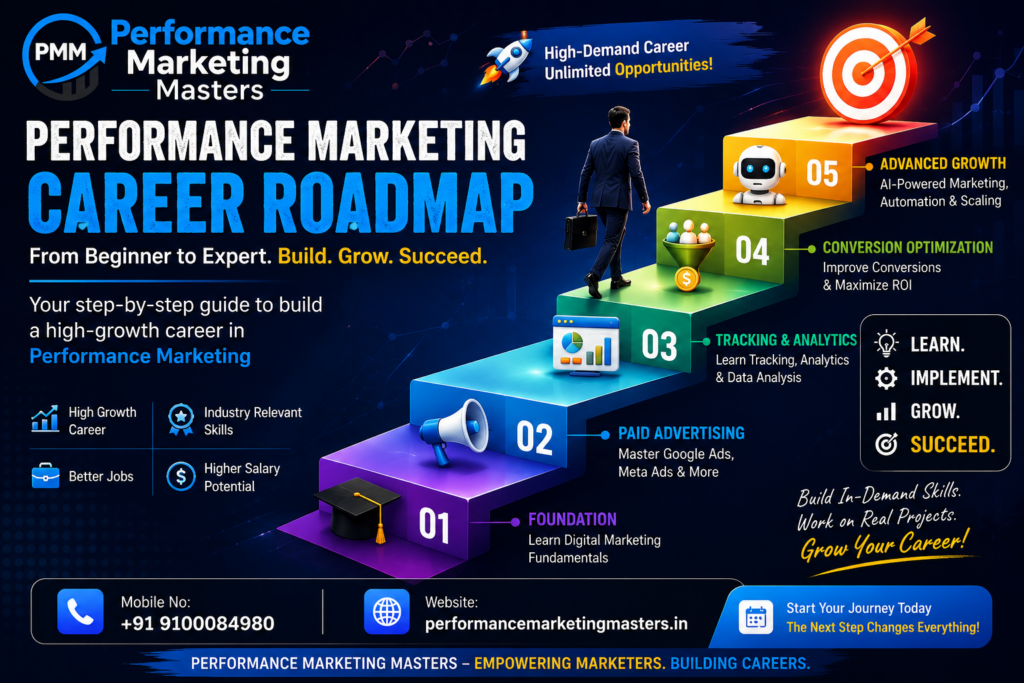
Starting a career in performance marketing requires a combination of fundamental knowledge, practical skills, and real-world experience. Follow a structured learning path to build confidence and become job-ready.
- Learn Digital Marketing Basics: Understand marketing funnels, target audiences, customer journeys, content, SEO, social media, and basic marketing concepts before moving into paid campaigns.
- Learn Paid Advertising: Develop practical knowledge of platforms such as Google Ads and Meta Ads. Learn campaign setup, keyword research, audience targeting, bidding, ad copy, budgeting, and campaign optimization.
- Learn Analytics and Tracking: Understand Google Analytics, Google Tag Manager, conversion tracking, UTM parameters, KPIs, and attribution. These skills help you measure campaign performance accurately.
- Learn Conversion Optimization: Study landing pages, calls-to-action, A/B testing, user experience, and conversion rate optimization to turn more visitors into leads or customers.
- Practice With Real Campaigns: Apply your knowledge through practical projects. Analyze campaign data, identify performance gaps, test different strategies, and optimize campaigns based on results.
- Build a Portfolio: Document your projects with campaign objectives, strategies, targeting, KPIs, optimization steps, and outcomes. A strong portfolio can demonstrate your practical abilities to potential employers.
Skills Required for a Performance Marketing Career
A successful performance marketer needs a combination of advertising, analytical, creative, and technical skills to plan campaigns, measure results, and improve conversions.
- Google Ads: Learn campaign setup, keyword targeting, bidding, ad optimization, and conversion-focused advertising.
- Meta Ads: Understand Facebook and Instagram advertising, audience targeting, retargeting, creative testing, and campaign optimization.
- Analytics: Use analytics platforms to understand traffic, user behavior, conversions, and campaign performance.
- Conversion Tracking: Learn pixels, events, UTM parameters, Google Tag Manager, and conversion tracking to measure campaign outcomes accurately.
- Keyword Research: Identify relevant search terms, understand user intent, and select keywords that can attract qualified traffic.
- Data Analysis: Analyze metrics such as CTR, CPC, CPA, conversion rate, ROAS, and ROI to make informed decisions.
- Copywriting: Create compelling ad headlines, descriptions, and calls-to-action that encourage users to take action.
- CRO: Understand landing pages, A/B testing, user experience, and conversion optimization.
- AI Tools: Use AI for research, ad copy ideas, audience insights, reporting, automation, and campaign analysis while maintaining human strategic judgment.
Performance Marketing Career Path
Career Level | Typical Job Role | Key Responsibilities | Skills Required for Growth |
1 | Performance Marketing Intern | Assist with campaigns, keyword research, reporting, and basic research | Digital marketing basics, Google Ads basics, Excel |
2 | Performance Marketing Executive | Set up campaigns, manage budgets, audiences, ads, and basic optimization | Google Ads, Meta Ads, keyword research, analytics |
3 | Performance Marketing Specialist | Independently manage campaigns and improve CPA, CTR, conversions, and ROAS | Campaign optimization, data analysis, conversion tracking, CRO |
4 | Senior Performance Marketing Specialist | Handle large campaigns, advanced testing, forecasting, and strategy | Advanced analytics, attribution, A/B testing, strategic thinking |
5 | Performance Marketing Manager | Develop strategies, manage budgets, teams, clients, and business KPIs | Leadership, budgeting, strategy, reporting, communication |
6 | Senior Performance Marketing Manager | Lead multiple campaigns and teams while driving scalable growth | Growth strategy, team management, forecasting, business analysis |
7 | Head of Performance Marketing | Own overall performance strategy, acquisition, budgets, teams, and revenue goals | Leadership, business strategy, advanced analytics, AI, decision-making |
Career Path: Intern → Executive → Specialist → Senior Specialist → Manager → Senior Manager → Head of Performance Marketing
Performance Marketing Jobs for Freshers
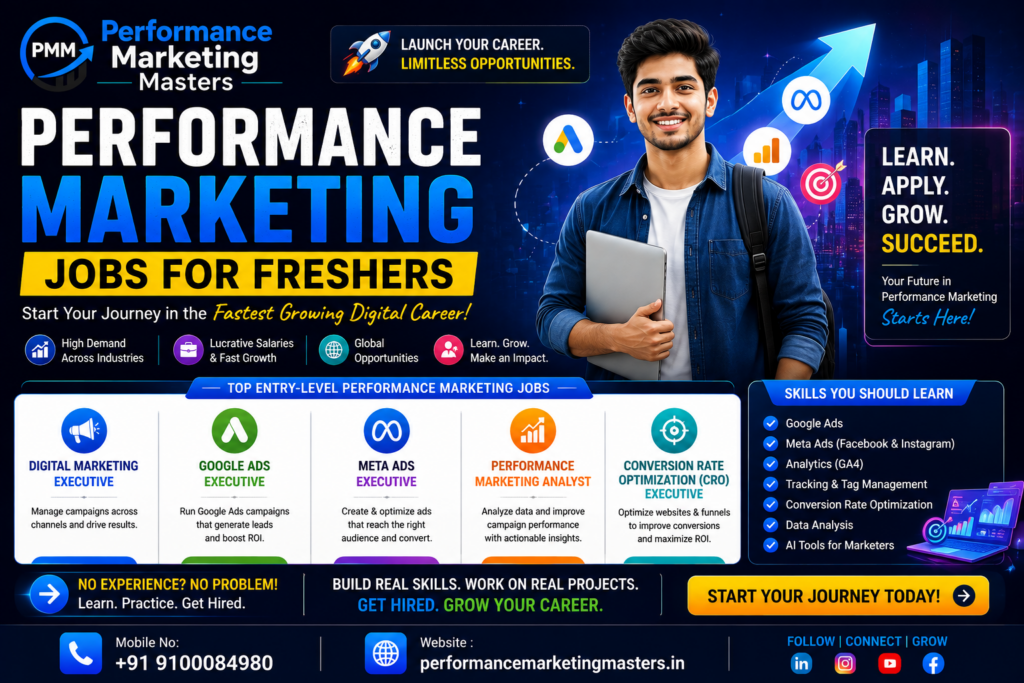
Performance marketing offers several entry-level opportunities for freshers who have a basic understanding of digital advertising, analytics, and campaign optimization. You do not always need extensive work experience to start; practical skills, relevant projects, and a strong portfolio can help you stand out.
- Job Roles: Freshers can apply for positions such as Performance Marketing Intern, Performance Marketing Executive, PPC Executive, Paid Media Executive, or Digital Marketing Executive.
- Eligibility: A degree or relevant qualification can be helpful, but employers often focus more on practical knowledge, certifications, analytical ability, and interest in digital advertising.
- Skills Employers Look For: Basic knowledge of Google Ads, Meta Ads, keyword research, analytics, conversion tracking, campaign metrics, Excel, copywriting, and CRO can improve your chances of getting hired.
- How to Get Your First Job: Learn the fundamentals, complete industry-relevant certifications, work on practical projects, apply for internships, and regularly apply for entry-level performance marketing positions.
- Resume and Portfolio Tips: Keep your resume focused on relevant skills, certifications, and practical experience. Create a portfolio showing campaign objectives, strategies, targeting, KPIs, optimization methods, and results from your projects.
Performance Marketing Salary in India
Performance marketing salaries in India generally increase with experience, campaign ownership, technical expertise, and the ability to deliver measurable business results. The following ranges can be used as indicative figures, not fixed salary guarantees.
Experience Level | Common Job Roles | Indicative Salary Range | Typical Responsibilities |
0–1 Year | Performance Marketing Intern / Executive | ₹3–5 LPA | Campaign support, keyword research, ad setup, basic reporting |
1–3 Years | Performance Marketing Executive / Specialist | ₹5–8 LPA | Campaign management, optimization, audience targeting, performance analysis |
3–5 Years | Senior Specialist / Performance Marketing Manager | ₹8–14 LPA | Strategy development, budget management, ROAS improvement, team coordination |
5+ Years | Senior Manager / Performance Marketing Lead | ₹14–25+ LPA | Growth strategy, large budgets, team leadership, forecasting, business performance |
8+ Years | Head of Performance Marketing / Growth Lead | ₹20–35+ LPA | Overall acquisition strategy, leadership, revenue growth, budget allocation |
How Much Time Does It Take to Learn Performance Marketing?
Learning performance marketing typically takes around 5–6 months to develop a strong foundation and become job-ready with consistent practice.
- 1–2 Months – Fundamentals: Learn digital marketing basics, marketing funnels, target audiences, campaign objectives, and important metrics such as CPC, CTR, CPA, and ROAS.
- 3–4 Months – Advertising + Analytics: Learn Google Ads, Meta Ads, keyword research, audience targeting, campaign optimization, Google Analytics, conversion tracking, UTM parameters, and performance reporting.
- 5–6 Months – Projects + Portfolio: Apply your knowledge through practical projects, analyze campaign performance, practice A/B testing and CRO, create case studies, and build a professional performance marketing portfolio.
Performance Marketing Certifications
Performance marketing certifications can help learners validate their knowledge, understand industry platforms, and strengthen their resumes. However, certifications should be combined with practical experience to build a successful career.
- Google Ads: Google Ads certifications demonstrate knowledge of search, display, video, shopping, and other advertising solutions. They are particularly useful for beginners targeting PPC and performance marketing roles.
- Google Analytics: Analytics training helps marketers understand website traffic, user behavior, conversions, events, and campaign performance.
- Meta Certifications: Meta certifications validate skills related to advertising, campaign planning, audience targeting, measurement, and optimization across Meta platforms.
- Other Useful Certifications: Certifications from platforms such as HubSpot, Microsoft Advertising, and other recognized marketing organizations can further strengthen your profile.
- Certification vs Practical Experience: Certifications show that you understand the concepts, but employers also want to see whether you can apply them. Practical projects, campaign analysis, optimization, reporting, and measurable results can demonstrate real capability.
How to Build a Performance Marketing Portfolio
A strong performance marketing portfolio helps employers understand how you apply your knowledge to real marketing problems. Instead of listing only the tools you know, showcase practical projects that demonstrate your ability to plan, execute, analyze, and optimize campaigns.
- What Projects to Include: Add Google Ads, Meta Ads, lead generation, e-commerce, remarketing, or landing page optimization projects.
- Campaign Case Studies: Explain the campaign objective, target audience, strategy, budget, channels used, and optimization process.
- Results and KPIs: Highlight measurable metrics such as CTR, CPC, CPA, conversion rate, ROAS, leads, and revenue where available.
- Reporting Dashboards: Include clear dashboards using tools such as Looker Studio or spreadsheets to demonstrate how you track and communicate campaign performance.
Performance Marketing Interview Questions
Performance marketing interviews typically test your understanding of advertising platforms, analytics, campaign optimization, and your ability to make data-driven decisions. Freshers should focus on explaining concepts clearly and showing how they would approach real campaign situations.
Common Fresher Questions
- What is performance marketing?
- How Does Performance Marketing Differ From Digital Marketing?
- What are CPC, CPM, CTR, CPA, and ROAS?
- What is a conversion?
- What is a marketing funnel?
- Why is conversion tracking important?
- How would you measure campaign success?
Google Ads Questions
- How Does Google Ads Work for Business Growth?
- What are keyword match types?
- What is Quality Score?
- What are bidding strategies?
- How Do You Optimize a Campaign With High CPC?
- How would you reduce CPA?
- What are negative keywords?
- How do you optimize a low-performing search campaign?
Meta Ads Questions
- How does Meta Ads targeting work?
- What are Custom Audiences and Lookalike Audiences?
- What is retargeting?
- How would you choose the right campaign objective?
- How do you test different ad creatives?
- What would you do if Meta Ads have a high CPA?
Analytics Questions
- What is Google Analytics?
- What are events and conversions?
- What are UTM parameters?
- How do you track campaign performance?
- What metrics would you monitor regularly?
- How do you identify where users are dropping from a conversion funnel?
What Is the Future of Performance Marketing?
The future of performance marketing can be understood step by step:
- AI and Automation: AI will increasingly support campaign optimization, audience analysis, ad creation, bidding, reporting, and forecasting. Marketers will use AI to work faster while focusing on strategy.
- More Focus on Measurable Results: Businesses will continue prioritizing measurable outcomes such as leads, sales, conversions, customer acquisition cost, ROAS, and revenue.
- Advanced Data Skills: Performance marketers will need stronger skills in analytics, attribution, conversion tracking, experimentation, and data interpretation to make better decisions.
- Creative + Performance: Successful marketers will combine data with strong ad creatives, copywriting, landing pages, and customer-focused messaging.
- AI Skills Will Become Essential: Knowing how to use AI tools for research, campaign analysis, content creation, automation, and optimization will become an important career advantage.
- More Career Opportunities: As companies invest in measurable digital growth, opportunities will expand across performance marketing, paid media, growth marketing, analytics, consulting, and leadership roles.
- Shift Toward Strategic Growth: Performance marketers will move beyond simply managing ads and will increasingly contribute to customer acquisition, revenue growth, and overall business strategy.
Conclusion
Building a successful performance marketing career requires a clear and practical approach. Start by learning essential performance marketing skills, including advertising, analytics, tracking, CRO, and AI tools. Apply your knowledge through real-world practice, create a strong portfolio, and develop measurable campaign experience. Then, use your skills and portfolio to secure your first job and progress toward senior roles. If you are ready to build industry-relevant skills, Performance Marketing Masters can help you take the next step toward a successful performance marketing career.
Frequently Asked Questions
1.Is Performance Marketing a Good Career?
Yes, performance marketing offers strong career opportunities, competitive salaries, and growth potential for professionals with advertising, analytics, and AI skills.
2. How to Build a Successful Career in Performance Marketing
Learn digital marketing, Google Ads, Meta Ads, analytics, tracking, and CRO. Then gain practical experience, build a portfolio, and apply for jobs.
3. Can a Fresher Become a Performance Marketer?
Yes, freshers can enter performance marketing by learning essential tools, completing practical projects, earning relevant certifications, and developing a strong portfolio.
4. What Skills Are Required for Performance Marketing?
Key skills include Google Ads, Meta Ads, analytics, conversion tracking, keyword research, data analysis, copywriting, CRO, and AI-powered marketing tools.
5. What Is the Average Performance Marketing Salary in India?
Performance marketing salaries in India vary by experience, skills, location, company, and results, with higher compensation available for experienced specialists and managers.
6. How Much Time Does It Take to Learn Performance Marketing?
With consistent learning and practice, beginners can develop foundational performance marketing skills within 3–6 months and become prepared for entry-level opportunities.
7. Is Performance Marketing Difficult to Learn?
Performance marketing is not difficult to learn when approached step by step. Practical experience with advertising platforms, analytics, and campaign optimization is essential.
8. What Is the Career Path of a Performance Marketer?
The typical career path is Intern → Executive → Specialist → Senior Specialist → Manager → Senior Manager → Head of Performance Marketing.
9. What Is the Career Scope of Performance Marketing in 2026?
Yes, performance marketing remains a promising career in 2026 as businesses continue investing in measurable digital advertising, AI, automation, and customer acquisition.
10. Can AI Replace Performance Marketers?
AI can automate many marketing tasks, but strategic thinking, creativity, business understanding, and decision-making still require skilled performance marketing professionals.